
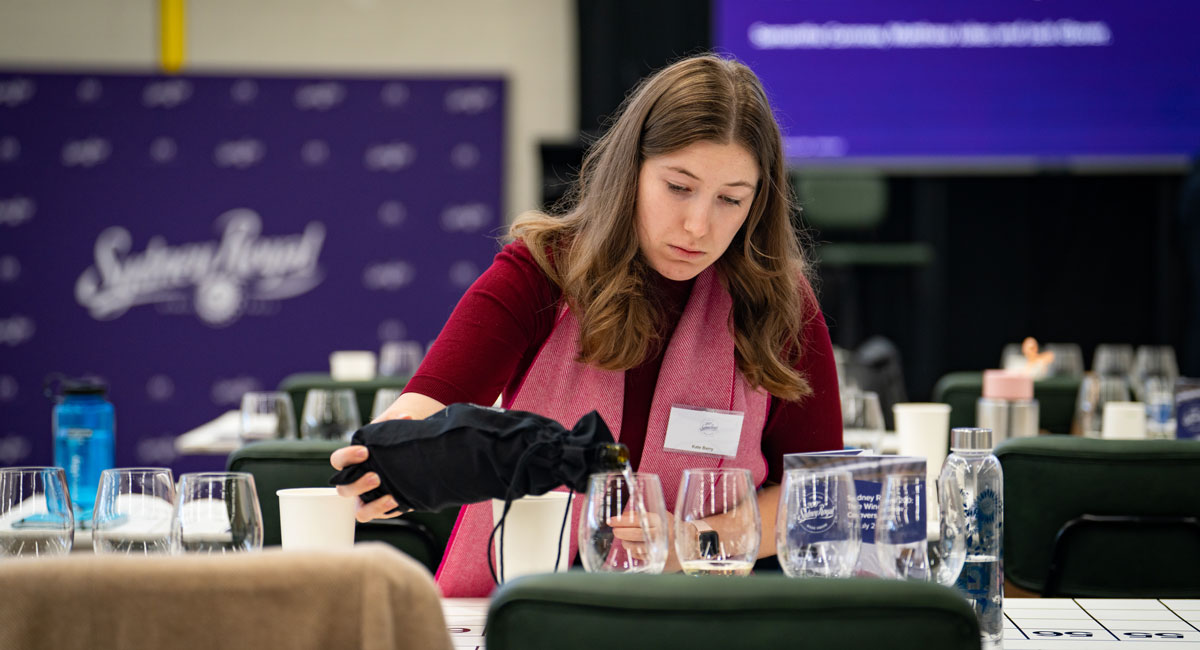
By Kate Barry
It’s fair to say I’m not your typical 19-year-old wine drinker. I’ve grown up around the industry, visited more wineries throughout my life than most people my age, and I love the conversations with winemakers and the thrill of discovering new varietals. Having worked in wine marketing for two years now, alongside studying commerce at UNSW, I have developed a real determination to see wine enjoyed by as many consumers as possible, now and into the future.
That’s why I find the current narrative around young people and wine, particularly the idea that we’re turning away from it, alarming, and not one I necessarily agree with. So, I wanted to offer a different perspective: why young people may not be embracing wine as much as the industry would hope, and some thoughts on how to spark their interest.
We may not be able to control all the variables facing the sector, but we can lean into ways to bring in more consumers and start to think about this age group differently! It’s not the same language and products that have universal appeal and we need to be cognisant of what products we are putting in front of these younger consumers, if we want to see them embraced. This topic was raised at the recent wine show symposium in Sydney, which was what sparked this piece. This article aims to share my perspective, as someone currently trying to champion more young people to drink wine.
The Sydney Royal 200: A call to arms to think differently about the future
This year, to mark 200 years since wine was first included in the Agricultural Society of NSW show, Sydney Royal held a Wine Symposium, bringing together established and emerging voices in the Australian wine industry to reflect on the past, present and future of the wine shows. There was lots of youth in the room that day. Members of the Rootling’s network, many younger aspiring judges all keen to learn from those with decades of experience. As probably the youngest person in the room that day, it was incredible to hear from legends in the industry how far wine and wine judging have come and the rigour around what goes into a show medal.
The sessions were fascinating – looking at the evolution of chardonnay, conversations about the pathway to judging, along with a historical context of the wine show system presented. However, the last panel of the day, featuring Trippas White Group Sommelier Louella Mathews and Bloomfield Wine Winemaker Lauren Hansen, chaired by 2026 Sydney Royal Chair of Judges Mike De Iuliis, was by far the most interesting from my perspective. It was this panel that looked to the future, which helped try and answer the question “What is next for the wine industry”? with specific reference to the wine show system.
The panel challenged ideas – noting that there’s often much snobbery about wine, and not enough conversations about “gateway” wines. Discussions were had about what we needed to do to change the way products like spritzes were evaluated and how to make wine less intimidating. There’s scope to evolve and think a little differently as we head into the future.
The Picture Being Painted: A Dull Outlook
When you look in the media, a rather dull picture is often created about where wine is heading. According to Wine Australia, wine consumption dropped roughly nine per cent between 2020 and 2022 (equivalent to 50 million litres). Domestically, people have been drinking less, and external export markets have been continually hindering future opportunities for the industry.
However, as a young person, the biggest threat, but also biggest opportunity for future progression for Australian wine rests with a group: the next generation. IWSR data shows that the proportion of 18-to-24 year olds who drink wine monthly has been halved between 2010 and 2023. From this issue, two questions emerge: Are young people really not drinking as much? And, if so, why aren’t young people drinking wine?
Firstly, addressing the question, ‘Are young people really not drinking as much?’. Caroline Lamb, contributor to the Business of Drinks podcast in the US and wine writer answers this poignantly. She cites how Gen Z spends roughly the same share of their income as previous generations did. Due to inflation, the same percentage simply buys less wine in today’s economy compared to 10 years ago, let alone 20 or 30. What this means, however, is not that the value has dropped, but the volume itself. Lamb goes on to say that this is evidence of a small, more engaged core rather than the category in a freefall.
What is important to take out of this is that there truly is a curious sector of the young adult market, whether that be wine content creators, foodies or young people who have been genuinely interested in wine, and it’s important not to neglect them altogether. Instead, we must wrap our heads around how appealing to this niche has evolved.
Why are young people not drinking wine?
Now to tackle the core question: ‘What aren’t young people drinking wine?’ The way I see it is in three areas:
1. Wine isn’t built for the occasions young people are drinking at
For decades, the industry, as pointed out by Andrew Shedden from Endeavour Group, has observed a natural life cycle, where inevitably at one point wine enters the conversation. People start on cheap spirits and premixes in their early 20s, and by their late 20s start to gravitate towards wine as they begin settling down. However, this simple equation doesn’t hold up today.
Not only is it taking society longer to settle down, as we become more of an aging population, but also the lifespan of premixes and craft beers has been extended. Brands like Fellr and Ampersand have extended their lifespan, and made premixes cooler for longer, whilst innovations in the cocktail world see people making their own at home rather than opening a bottle of wine. These products are accessible, easy to work out what you’re drinking, particularly when you’re driving and are delicious. They don’t rely on a pre-determined language or understanding of category nuances – they are easy to trial and discover.
To take it one step further, younger people mainly attach the consumption of alcohol to an event. Yes, there is an interest in health and wellness but it’s the occasions where we gather that present an opportunity. There emerge spaces here where specific wines have already cemented their seat at the table. Whether it be a birthday, graduation, wedding, or another large celebration, a bottle of bubbles is normally not too far away. However, at newer, more casual festivities, like Galentine’s Day lunches, Slideshow Nights, or monthly themed dinner parties, it is increasingly these premixes and cocktails helping to fill a room, rather than presenting an opportunity for wine.
We’re often not making it easy for wine to enter the occasion. How often do we see wine at music festivals, at the places young people are gathering? It’s expensive to sponsor some of these events and get involved but not entirely out of reach if we think about the opportunity.
2. Price (but not in the way the industry may assume)
There is much speculation that elitism is the main motivator stopping the younger demographic from engaging more with wine, but it’s slightly simpler (or more complex, depending on your mind) than this. A clear economic argument emerges (yes, I am a business student!) which needs to be given more weight.
When people try and get into wine, it is not a case of the first wine you try you fall in love with. Lauren Hansen, from Bloomfield Winery, at the Symposium highlighted the importance of finding a ‘gateway wine’. What exactly does this mean? Something which opens your eyes to the excitement wine can bring. It’s like finding that book that reignites a passion for reading. You may not get it the first trip around, but when you experiment, you can unlock it. And that’s it – experimentation. Young people simply do not have the money to ‘experiment’ and find a wine that they enjoy. It’s intimidating and often confusing with the rituals and rules. When squeezed by student debt, rent, inflation and other pressures, young people don’t feel they have the space and money to do this so stick to safe choices.
It’s a picture painted crystal clear from a hospitality lens. Restaurant wine lists, particularly by the bottle lists with wines often start at $80 to $150+ markups. As students, $20 for a glass is inaccessible and a big leap of faith to take when you don’t know what you’re going to get from some of these wines you’ve never tried before. The places we dine don’t have sommeliers to navigate a list, so we stick to a cocktail, with a flavour profile we’re familiar with, which is less risky. Even when there is an expert, young people don’t know the right questions to ask to help inform their decision.
Some of my university friends noted recently how the first wines they are given are often cheap wines – the ones served at functions or social events which often are not great. You don’t need to be drinking $30+ wines for them to be good, but the wines often most affordable to those starting out are not always the best quality and that turns people off, not knowing any difference and assuming that this is what all wine tastes like.
We recently did a tasting at home with my friends where we had a range of wines from Aldi. The quality was great -– it got people interested and for many, this will be their go-to place to buy a reliable rosé, sparkling prosecco or yes, that $10 Freya and Jules Riesling that picked up the trophy for best Riesling at the 2026 Sydney Wine Show! They are drinking wine if the right products are put in front of them.
3. The Feed-ability of wine vs Spritzes and Cocktails
Gen Z craves an Instagrammable outing, where their camera eats before them. It’s not just their want to share the aesthetic content, but it also mirrors their consumption. They’re reported to be 62% more likely to buy a product they’ve seen advertised on social media, and 84% more likely to be swayed by a creator when compared to a brand’s own messaging. I know when I’m looking for a new bar on a night out the Top 100 best bars in the country aren’t the online media lists I’m consulting, but rather it’s my search bar on TikTok or Instagram. The videos with the most views and engagement may not be the most sophisticated or even best, but its content that catches the eye and evokes an emotion.
For cocktails and spritzes, this appeal is easy. Whether it’s an Aperol, Hugo Spritz, or the newest drink of the summer straight from Europe, the Sarti Spritz, the bright, playful colours play for the camera. When juxtaposed against the static image of a red or white wine in a glass, the story isn’t as captivating. It’s telling that the wine subcategories where Gen Z actually over-index are the most visual ones: on Drizly (now owned by Uber), Gen Z accounted for just 3% of total wine sales, but punched well above that share on wine spritzers, Champagne and sparkling, and rosé. These are precisely the styles that photograph and video best.
How can we attract a younger group of wine drinkers?
Clearly there are challenges faced in bringing in a new category of drinkers, but surely there is a way to navigate it and some investment to be made into how to capture their imagination? It requires a mental shift to properly capitalise on this market. Importantly, it’s about segmenting your messages. What you communicate to a 50-year-old male is not right for a 24-year-old – so think very clearly about who you are marketing to and be focused on how you communicate.
1. Find the Gateway wine
One theme which continually surfaced at the wine symposium was a question of legacy: what actually turns someone into a wine drinker for life, rather than someone who has a glass just because it’s being served at an event or on the table? The answer is something highlighted by both Lauren and Louella on that final panel – the elusive ‘Gateway’ wine. If young drinkers cannot afford to buy bottles when out at restaurants to experiment and find their wine, the industry must consider how they can help bring the gateway experience to them.
As lovers of wine, there is some sort of duty to help share and enable the discovery process. I come from the privileged position where I was able to find a gateway wine very early on having grown up in a household where great wine is all around. I don’t have a favourite – it’s usually what Mum and Dad are drinking, although I do love a good Fiano or Rosé. Sharing wine with friends and family and hosting tastings at home where my friends are always welcome at our table leans into the experimentation whilst appealing to the social occasions that young people love. Let it be clear – the younger demographic is keen to discover more about wine – it just needs to be in an accessible way.
Lauren and Louella noted that “Everyone’s onto seltzers at the moment. Seltzer turns into Prosecco, which turns into sparkling wine, which probably turns into Champagne as disposable income goes up. Nobody’s going to start out drinking a 2010 Shiraz; nobody starts on Barolo. You start somewhere. So how do we support that part of the industry too? It’s often treated as separate: fine wine and fun wine, but really, it should be seen as a sliding scale.”
At my recent birthday gathering, I held a Paint and Sip party. We started with cocktails, but for many it was a chance to learn about wine as we created artworks gathered around a shared table. The Brown Brothers wines were all poured (the lychee and mango flavours particularly of interest). Mum followed with the Oliver’s Taranga Fiano, with many declaring it the best white wine they have ever tried. The same was true of the Redman Sangiovese. The point was that people were able to try and discover things that they would not have been exposed to in a fun and informal way, being encouraged to use the spittoons on the table to tip out wines they may not like and find something that they enjoyed.
So, I ask the question, in your tasting rooms and venues, do you have a curated tasting for those starting out on their wine journey? With wines and language that bring them into the conversation rather than alienating them? We see wineries now targeting experiences for little kids (little snacks/ juices whilst their parent’s taste wine), what about something for those in their early twenties? How are you training your staff to have some fun with the tastings, or are you treating all of your customers the same way and expecting all ages to engage with the same taste profiles and messages? If you have a venue, why not use your Coravin or enomatic machines to have some more experimentation, not just using for the expensive wines? Some of the wine bars in the UK have self-pour machines designed to help consumers choose something that they like – maybe there’s something in this for Australian and New Zealand on premise venues?
2. Capitalise on the smaller formats
If you have the capacity, jump on to the way young people are consuming wine. It’s not a bottle; it’s a glass or two at a party, a can at a picnic, a test before buying the full size. Rather than fighting against this pattern, cater to these needs directly. The rise of wine in a can has already been seen, and smaller servings like the Poco Vino range, who have absolutely nailed the demands of young people.
As P platers we have zero alcohol rule until we’re off our Green Ps in NSW (which means nothing at all for the designated drivers). Then, when we’re moderating alcohol consumption whilst driving it’s easier to know what you’re drinking when the volume is pre-determined; not knowing how much is in a glass when poured for you can be hard!
3. Own “Spritz Summer”
Off the back of the euro summer boom, Australians are primed to relive that Aperol-in-hand, sparkling-wine-adjacent feeling at home. Sparkling and lighter wine styles naturally extend off this culturally embedded trend, being low commitment, social, photogenic, and often genuinely a gateway into wine drinking without the elitism attached to “serious” reds. Lean into the cocktail and spritz culture too, offering spritz recipes with your sparkling wines to give young people a reason to buy the wine.
4. Don’t write off red wine
There’s a clear trend that’s emerged up until this point, which is that it’s the sparkling and white wine that captures the younger generation. Don’t interpret this as red wine being completely dead for young drinkers. I’ve met many people who honestly would prefer a bottle of red over a bottle of white. To break down the barrier between the big, heavy, high-tannin styles and young drinkers, the industry needs to capitalise on the strength of Australian wines.
We’ve never had better quality red wines in Australia than we do now. It was another major theme emphasised throughout the day at the Wine Symposium, especially by the late Matthew Jukes, was how Australian reds are moving in the right direction. Jukes singled out Australian Shiraz as the most exciting thing he’d tasted all week, emphasising a freshness now running through even more intense styles. It marks a real departure from the heavier Shiraz of even a decade ago. He made a similar case for Cabernet, arguing Australia has largely sidestepped the difficult-to-drink styles now common elsewhere, even dubbing the country’s winemakers “the balance brigade” for it. It’s something that as an industry, must be taken in stride and communicated to the consumers, breaking down preconceptions young audiences have. Lighter-styled reds have an opportunity to bring people in the category; it’s just about putting the right wines in front of people.
Back to the question of the engagement of young wine drinkers and looking to the future. The truth is, history is most powerful when it’s used to invite new people in, not remind them how much they are unaware of or exclude them entirely. The wineries and venues gaining ground with younger drinkers now aren’t the ones simplifying their story, they’re the ones taking the time to tell it properly and in an accessible and relevant way to young people. I can’t wait to champion and advocate for the sector as the voice of youth! Be optimistic, there’s lots of young people to influence.
Hopefully, the next 200 years of Australian wine will be shaped less so by prestige and more so by a shift to bring in new people around the table.
References
https://winecompanion.com.au/articles/news/young-people-and-wine
https://thebigsmoke.com.au/2025/10/21/are-aussies-really-ditching-the-booze/
https://everydaydrinking.substack.com/p/gen-z-to-wine-please-stop-condescending


